
What is the Surva Festival in Bulgaria?
Table of Contents
What is the Surva Festival in Bulgaria?
The Surva Festival is one of Bulgaria’s most important winter folklore celebrations and one of the biggest masquerade events in the region. Every January, the city of Pernik fills with masked performers, heavy bells, and ritual-style parades rooted in old beliefs about chasing away evil spirits and welcoming health, prosperity, and good luck for the year ahead.
Even though it has grown into a major public event, Surva is still closely connected to community traditions that families keep alive year after year — not as a staged show, but as a living part of local culture.
📍 Where does the Surva Festival take place?
The main celebration takes place in Pernik, a city in western Bulgaria, about 30 km southwest of Sofia. Because it’s so close to the capital, it’s common to visit Surva as a day trip from Sofia.
Pernik’s location and proximity to Sofia
- Western Bulgaria, close to Sofia
- Easy access by car, train, or bus
Works well as part of a winter itinerary that includes Sofia
Why Pernik is considered the capital of the Surva Festival
Pernik is strongly tied to Surva because it’s where the festival became a large-scale annual gathering, bringing together masquerade groups from across Bulgaria (and later, from abroad). Over decades, the city built a reputation as the country’s main meeting point for these traditions.
How the city transforms during the event
During Surva, central Pernik feels like an open-air stage:
- Parade routes, stages, and crowd barriers appear.
- Folk music and drums are everywhere.
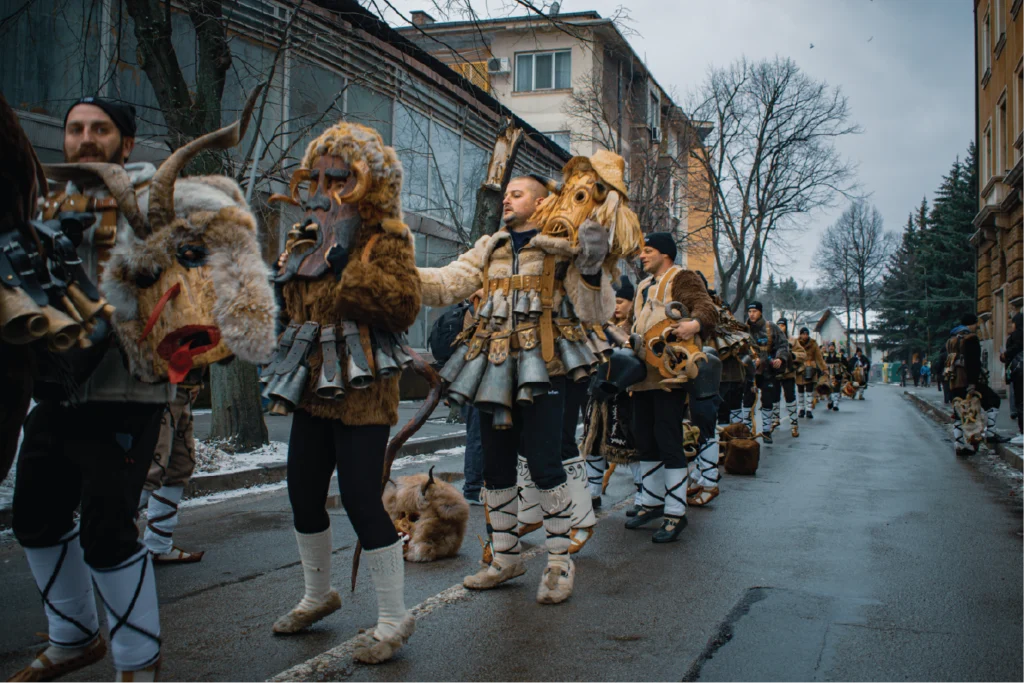
- Streets fill with performers in full costume throughout the day.
- Evenings often include torchlight moments and fire-related performances.
When is the Surva Festival celebrated?
Surva usually takes place in January, typically around the last weekend of the month. The exact dates can vary slightly each year.
📅 Exact dates (which vary slightly each year)
Surva is held annually, but dates shift depending on the calendar and the festival program. It’s best to confirm the schedule ahead of time if you’re planning a trip.
Duration of the festival
Most editions run for 2–3 days, often from Friday to Sunday, with the busiest parades happening on the weekend.
☁ Weather conditions during the celebration
January in western Bulgaria is cold:
- Temperatures are often around or below freezing
- Snow is possible
- Evenings can feel significantly colder than daytime (especially if you’re standing still for long periods)
Differences between local village rituals and the international event
This is a useful distinction for travelers:
- In villages around Pernik, related traditions often take place in mid-January (linked to the “Old New Year” in the Julian calendar). These are more local and community-based, sometimes involving house-to-house visits.
📌 The big festival in Pernik later in January is a large public gathering with many groups performing in one place, with parades designed for a wider audience.
👹 Who are the Kukeri?
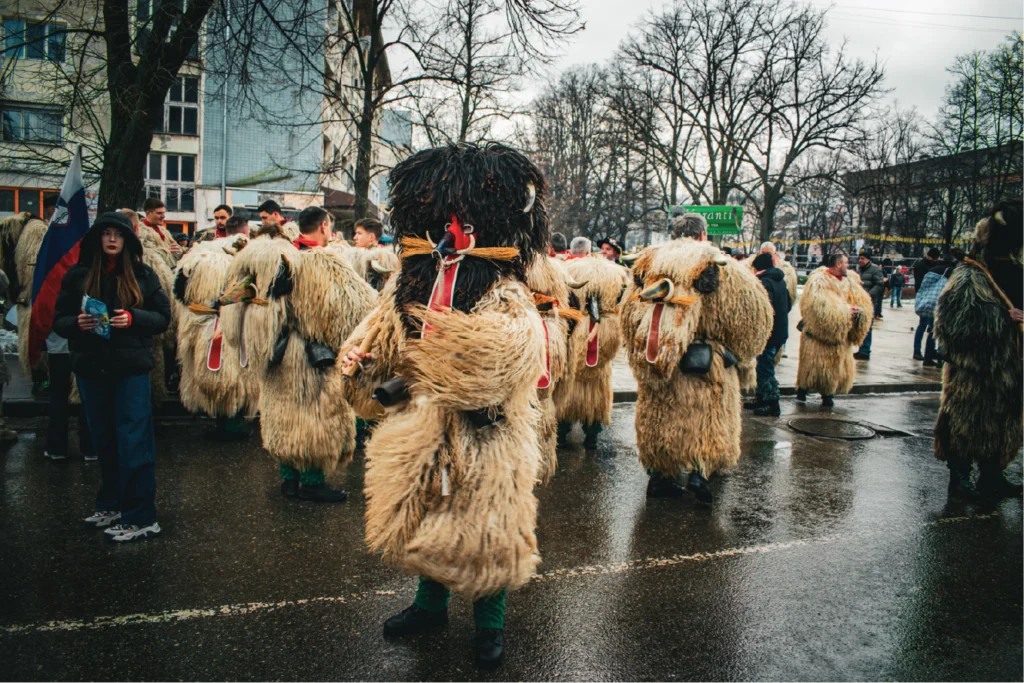
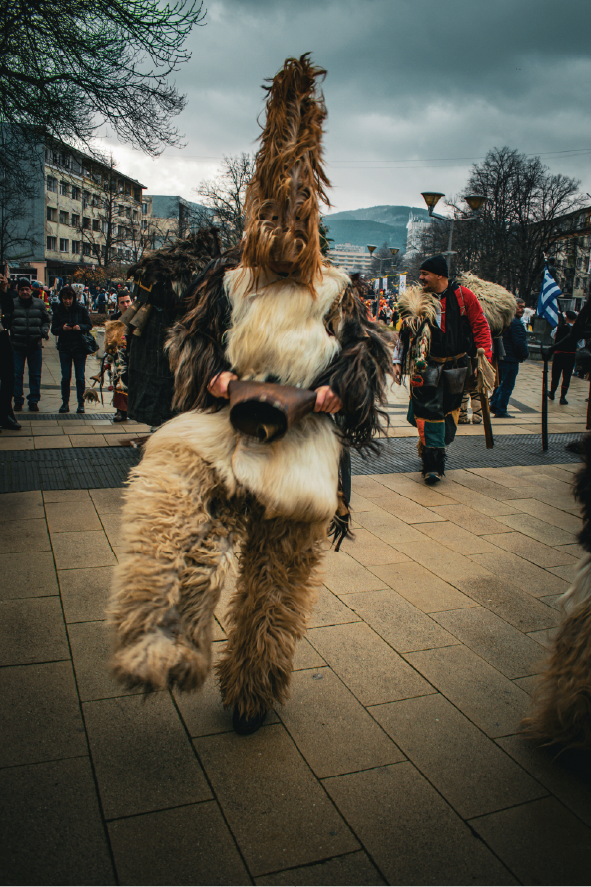
The Kukeri are the central figures of the Surva Festival. They’re masked performers who take part in ritual-style dances and processions meant to drive away negative forces and bring good fortune.
Who they are
Traditionally, Kukeri groups were often made up of young men, and participation was tied to community identity and rites of passage. Today, many groups include a wider mix of ages, and in some places women and children also participate.
Why they wear elaborate masks and costumes
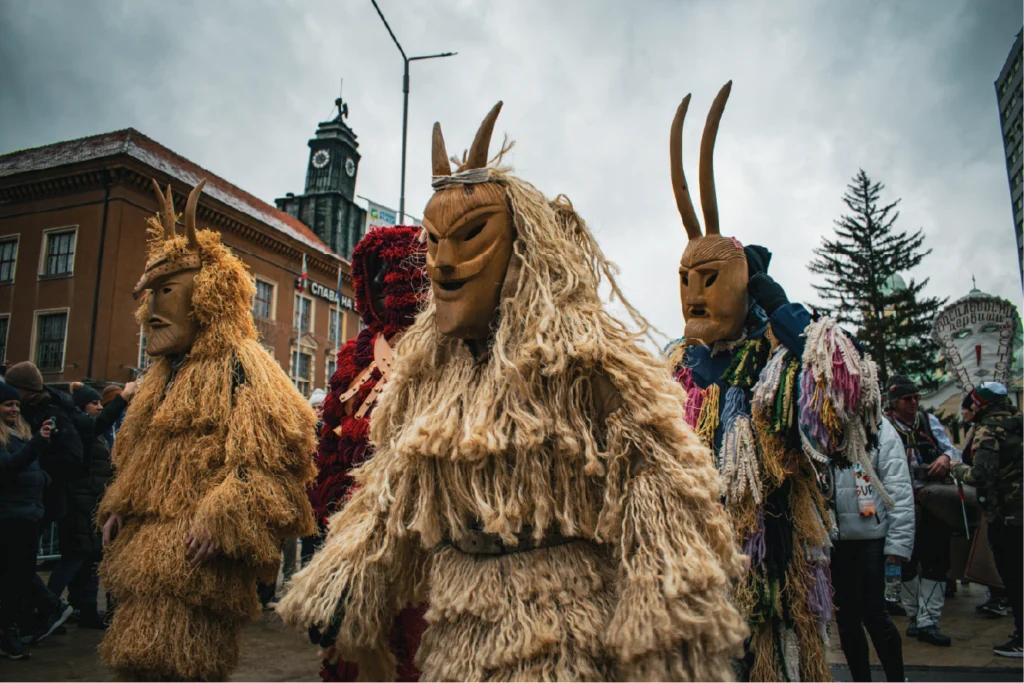
Their costumes are meant to look powerful and intimidating:
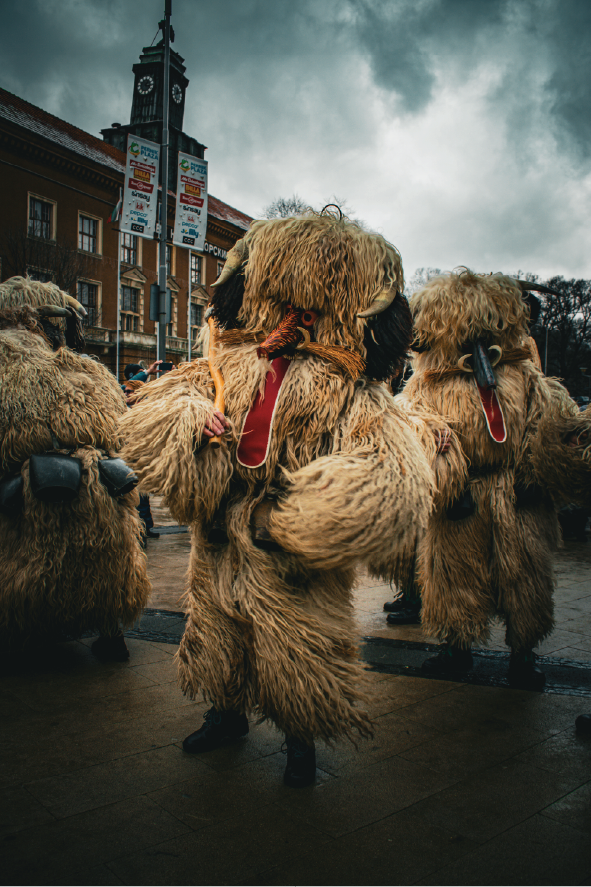
- Animal furs and hides
- Horns, tusks, or exaggerated facial features
- Tall headpieces that make them look larger than life
The logic behind it is simple: if the figure looks stronger than the bad luck it’s chasing, then the bad luck has nowhere to stay.
🔔 The role of bells and loud sounds
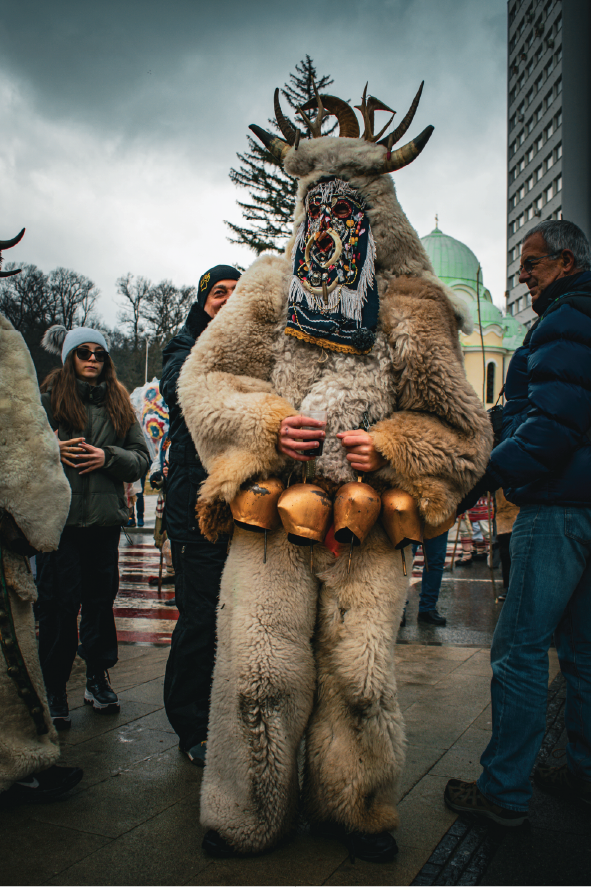
A key element is the belt of heavy bells worn around the waist. As Kukeri move and dance, the bells create a constant loud clanging — a ritual sound meant to “clean” the space and push away anything unwanted.
How different regions have different Kukeri styles
Across Bulgaria, there are regional variations in:
- Mask shapes and materials
- Costume silhouettes (some very furry, others more fabric-based)
- Characters included in the group (some include symbolic roles like a “bride,” a “groom,” or a “bear” figure)
Surva is one of the best places to see many of these styles together.
Why are Kukeri masks so important?
Kukeri masks aren’t just decorative — they’re symbolic and often deeply personal.
Traditional materials used
Masks and costumes are commonly handmade using:
- Wood
- Leather
- Animal fur
- Feathers
- Plus ribbons, beads, horns, and other ornaments
Colors and their meanings
Color choices often carry symbolic meaning in folklore traditions. Common interpretations include:
- Red for life and fertility
- Black for soil and the cycle of life
- White for purity, light, and cleansing
The exaggerated and sometimes frightening designs
Many masks include oversized facial features, dramatic eyes, or animal-like elements. The goal isn’t to look “pretty” — it’s to look strong, wild, and impossible to ignore.
How masks are handmade and passed down through generations
In many communities, mask-making is a family tradition. Costumes and bells may be repaired and reused year after year, becoming part of a group’s identity.
What is the meaning of the Surva Festival?
At its core, Surva is a ritual of renewal.
📌 The symbolic purification of the community
Surva represents a collective reset — clearing out what the community wants to leave behind from the old year.
📌 The belief in chasing away evil spirits
The masks, noise, movement, and fire elements all reinforce the same theme: pushing away negative forces and making space for something better.
📌 Wishes for fertility, health, and abundance
These traditions come from agricultural and community life, where a “good year” meant healthy families, healthy animals, and enough food and stability.
📌 Its connection to ancient agricultural cycles
Surva takes place during the deep winter, when people historically looked toward the return of light, the end of harsh conditions, and the future season of growth.
Is the Surva Festival recognized by UNESCO?
Yes — Surva-related traditions have international recognition as intangible cultural heritage. That recognition highlights Surva as a living tradition maintained by communities, not just a performance.
Why Surva stands out among European folklore festivals
Surva is notable for:
- Its scale
- The intensity and craftsmanship of costumes
- The fact that it’s still practiced as community tradition, not only as tourism
What can visitors expect at the Surva Festival?
Surva is immersive and sensory — the kind of event you feel in your chest because of the bells.
Visitors can expect:
- Massive Kukeri parades with many groups performing throughout the day
- Traditional music and dances, including drums and folk ensembles
- Fire rituals and night performances, often the most atmospheric moments
- Local food and drinks sold around the event (grilled meat, pastries, warm drinks)
A mix of tradition and celebration, where ritual elements and festival energy overlap
Is the Surva Festival worth visiting as a tourist?
Yes — especially for travelers interested in culture and traditions that are still alive.
Here’s why it’s worth it:
- It feels authentic and community-driven, not like a staged tourist show
- The visuals are strong (perfect if you like photography or video)
- The atmosphere is welcoming, and people are often happy to explain what you’re seeing
- It’s a unique winter travel experience in Bulgaria, close enough to Sofia to fit into a short trip
✨ Tips for visiting the Surva Festival in Bulgaria
This is where you can help readers plan with confidence.
What to wear in January
- Warm layers (thermal base layers help a lot)
- Insulated waterproof boots
- Gloves + hat (especially for night events)
- Hand warmers can be a game changer if you’re staying for hours
Best days to attend
- Weekends are usually the main parade days
- Evenings can be worth it for torchlight/fire elements, but expect colder temperatures
📍 Where to stay: Pernik or Sofia?
- Pernik has limited accommodation
- Many travelers stay in Sofia and commute for the day
- If you want to stay in Pernik, booking early is important
🚌 How to get there
- From Sofia: train, bus, or car
- Allow extra time because transport gets crowded during festival days
- Arriving early helps you get a better viewing spot
📸 Basic etiquette and photography tips
- Don’t block the parade route for photos
- Ask with a gesture before taking close portraits (many performers are happy to pose)
- Consider ear protection if you’re sensitive to loud sounds (especially for kids)
Surva Festival vs other Kukeri festivals in Bulgaria
Surva isn’t the only Kukeri celebration in Bulgaria — but it’s the largest and the most internationally known.
Key differences:
- Size: Surva brings together a very large number of performers and groups in one place
- International presence: you’ll often see groups from other countries
- Organization: it runs like a city-scale festival with scheduled parades
Village rituals vs city festival: village events can feel more intimate and community-based, while Surva in Pernik is a large gathering designed for public viewing
Fun facts about the Surva Festival
- Some costumes (especially with bells) can weigh 40+ kg
- The sound of bells can be heard from far away, and that’s part of the ritual effect
- Families prepare costumes for months, and some pieces are reused for generations
- Groups from many countries participate, which makes the festival feel like a meeting point of masquerade traditions